
Your hazardous tree removal specialists in Lost Hills, CA. Free assessments, certified arborists, and complete cleanup.
B. Haney and Sons Arborists provides professional hazardous tree takedowns throughout Lost Hills, CA. Trees that are leaning, decaying, hollow, or structurally compromised require specialized removal techniques — not standard takedown methods. Our ISA-trained arborists assess the actual risk and execute the removal with controlled, deliberate precision.
Properties throughout Lost Hills (pop. 1,734) face unique challenges when it comes to hazardous tree removal. California climate patterns, the local tree species mix, and the specific site conditions across Lost Hills all influence the approach we take. B. Haney and Sons Arborists tailors every hazardous tree removal project to the conditions your property actually faces — no generic solutions, no unnecessary work, no upselling on services your trees do not need.
Choosing the right contractor for hazardous tree removal in Lost Hills, CA makes the difference between proper tree care and damage that can last for decades. B. Haney and Sons Arborists uses correct rigging, follows ANSI standards, and backs every project with workmanship pride from a company carrying on a tree care tradition since 1940. Call (833) 214-3237 to schedule your free arborist assessment.
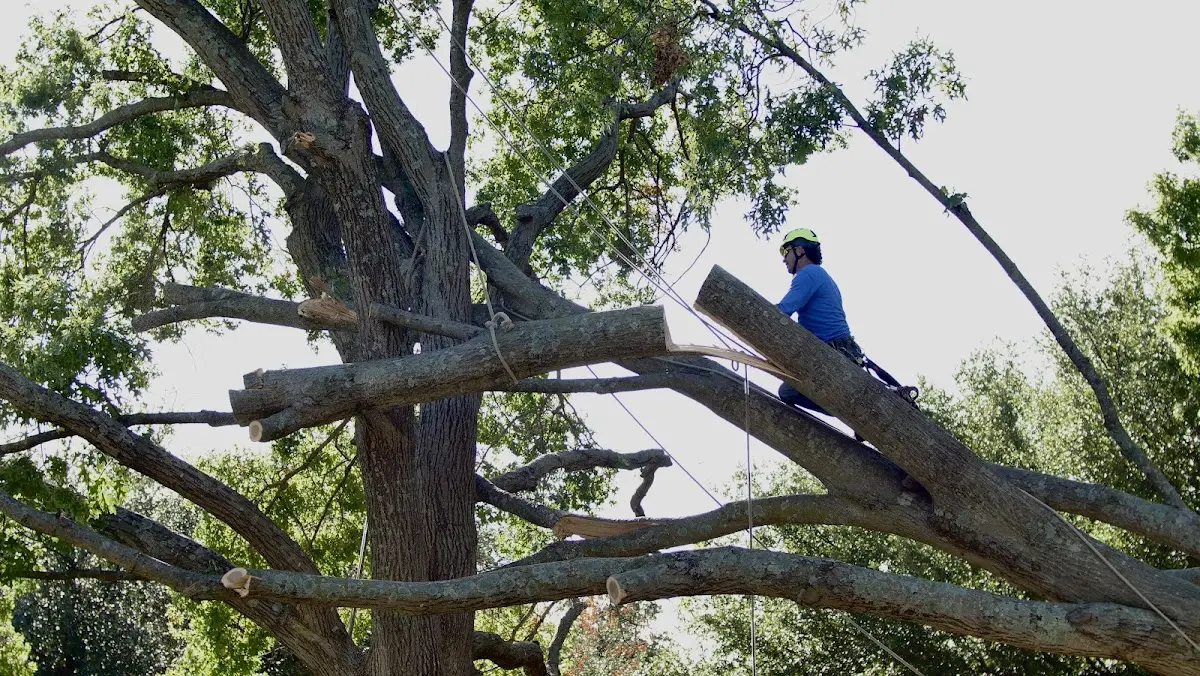
Here is how we handle every hazardous tree removal project in Lost Hills.
Our ISA-trained arborist evaluates root health, trunk integrity, lean angle, structural defects, and target zones to confirm the tree is genuinely hazardous and to plan the safest takedown approach.
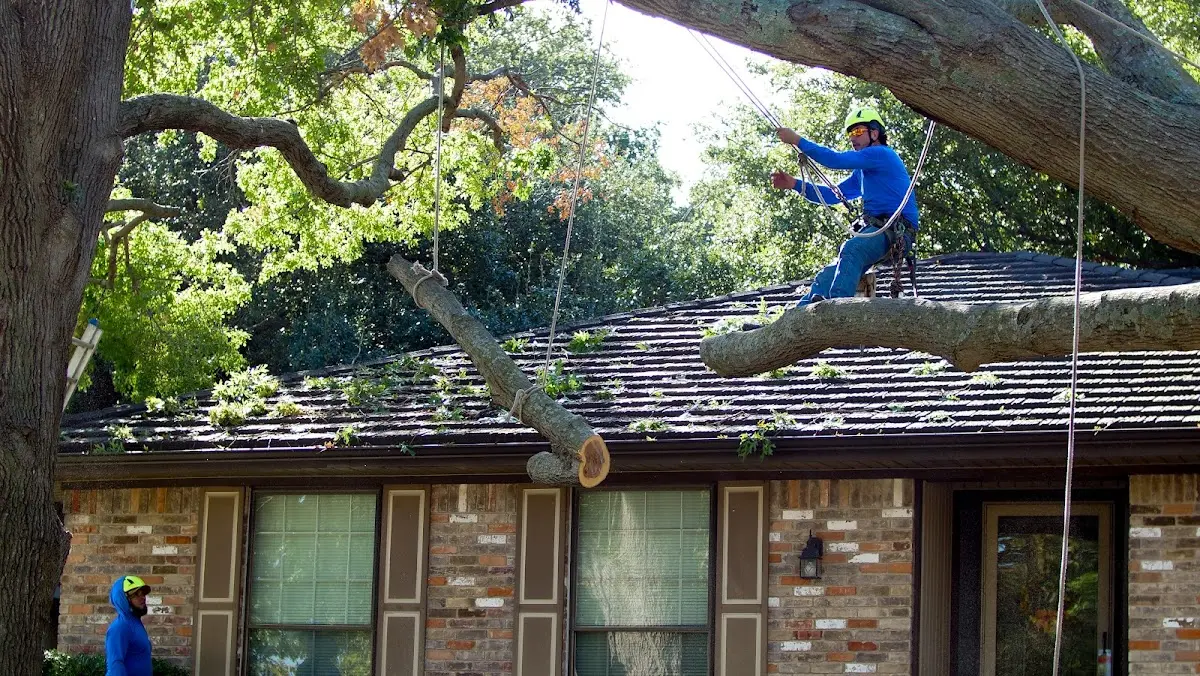
B. Haney and Sons Arborists plans every hazardous tree takedown in Lost Hills with the worst-case in mind. We assume wood may fail unexpectedly and rig accordingly — bigger margins of safety, more crane support, lower lifting points.
Our Lost Hills arborists size every section based on what the wood can actually hold under load. Hazardous trees sometimes lose pieces unexpectedly — we never assume, we always test, we always have backup rigging.
We document the hazard for your insurance or HOA records, provide a written work summary, and complete full debris cleanup including stump grinding if requested.
Common questions about hazardous tree removal in Lost Hills.
Warning signs in Lost Hills trees include large dead branches, mushrooms or conks at the base (root rot indicators), bark falling off in sheets, hollow trunk cavities, sudden lean or recent root disturbance, and significant crown dieback. B. Haney and Sons Arborists arborists can perform a paid risk assessment with a written report or include a basic visual evaluation with any free quote.
Hazardous tree removal in Lost Hills typically costs 30 to 100% more than standard removal of a comparable healthy tree, due to the extra rigging precautions, frequent crane requirements, and longer takedown time. Specific pricing depends on tree condition, size, target zones, and access. B. Haney and Sons Arborists provides detailed written estimates.
Hazardous trees in Lost Hills have compromised wood that cannot bear normal rigging loads. We use smaller sections, more conservative cuts, frequent crane support, and additional safety personnel. The result is a slower, more deliberate takedown — worth the cost to protect property and people, but more labor-intensive than healthy-tree work.
Our Lost Hills arborists assume hazardous trees may lose pieces unexpectedly during the takedown. We use crane support to pre-load sections before cutting, smaller sections than a healthy tree would require, redundant rigging tie-ins, and ground crew positioning that keeps everyone clear of potential failure zones. Slow and methodical is safer than fast.
Honest reviews from property owners who chose B. Haney and Sons Arborists for their tree care needs.
"Tree transplanting service to move a 15-foot crabapple from one part of our yard to another. The crew root-pruned in advance, dug it properly, and transplanted with good soil prep. Tree survived the move beautifully and is blooming now."
"Tree planting service was excellent. The arborist helped us pick species that would thrive in our soil and climate, and the planting itself was done with proper depth, root ball preparation, and staking. All five trees are doing great two seasons later."
"The arborist gave honest advice during the estimate — recommended we keep two trees we thought needed removal because they were actually healthy and worth saving. Saved us money and kept the trees. That kind of integrity is rare."